Ford
From Catalog to Commerce
Building the design system and platform that set a new standard for how the world's most recognized automotive brands show up online.
— Summary
Mission
Transform Ford.com into a fluid commerce platform where discovery, configuration, financing, and ownership live in one continuous narrative, anchored by an enterprise design system built to scale globally.
The Win
Established and delivered the Ford Design System — a global framework now stewarded in-house, directed the next-generation Ford.com launch, and earned the #1 Automotive Mass-Market Website ranking from J.D. Power, proving a legacy OEM can deliver the seamless commerce ease of a modern tech leader.
— Challenge
Consistency at the Speed of a Global Brand
With roughly 12 million monthly visitors, Ford.com didn't lack traffic, it lacked an experience matching the brand. Behind the scenes, multidisciplinary teams operated without a shared language, compounding fragmentation across every new market, sub-brand, and platform release.
Meanwhile, the site functioned as a static catalog rather than an active commerce engine where research, configuration, financing, and ownership converge. The challenge wasn't just designing a better website; it was engineering the underlying infrastructure to ensure every Ford digital touchpoint, present and future, remains coherent, scalable, and unmistakably Ford.
— Execution
Architecture Before Aesthetics
Driven by a continuous creative vision spanning agency and in-house leadership, what began at VML as a design system initiative became an enterprise strategy Ford trusted enough to bring internal. As Experience Design Director and Group Creative Director at VML, I established the foundation, then joined Ford directly to lead its evolution, directing the next-generation Ford.com launch and the J.D. Power #1 ranking that followed.
Ford Design System
Established the foundational digital design language — typography, color, motion, component architecture, and interaction patterns. All engineered to scale across global markets and vehicle lines. Far beyond a static style guide, it serves as living creative infrastructure built to be stewarded and enforced organization-wide.
1
Future of Ford.com
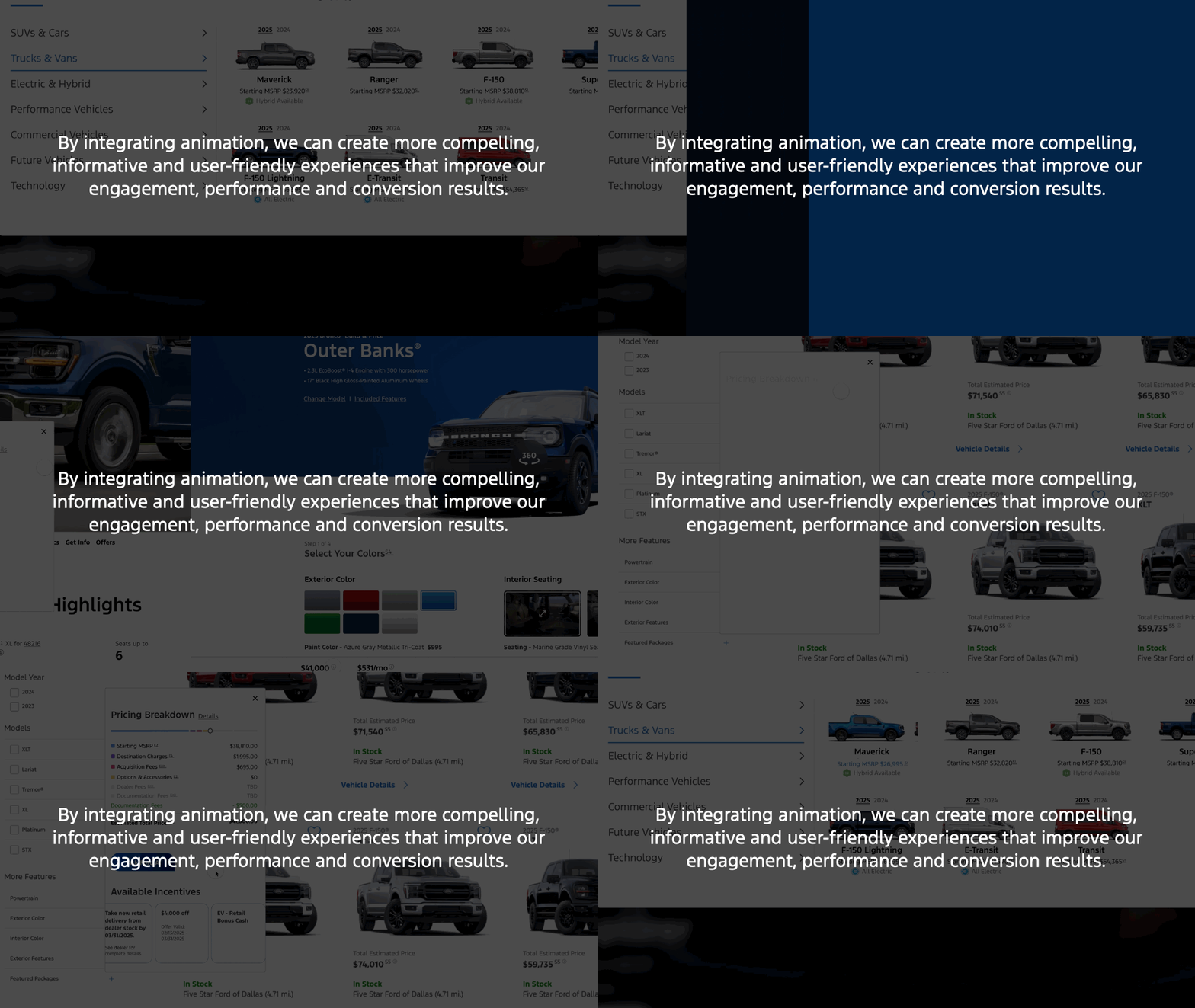
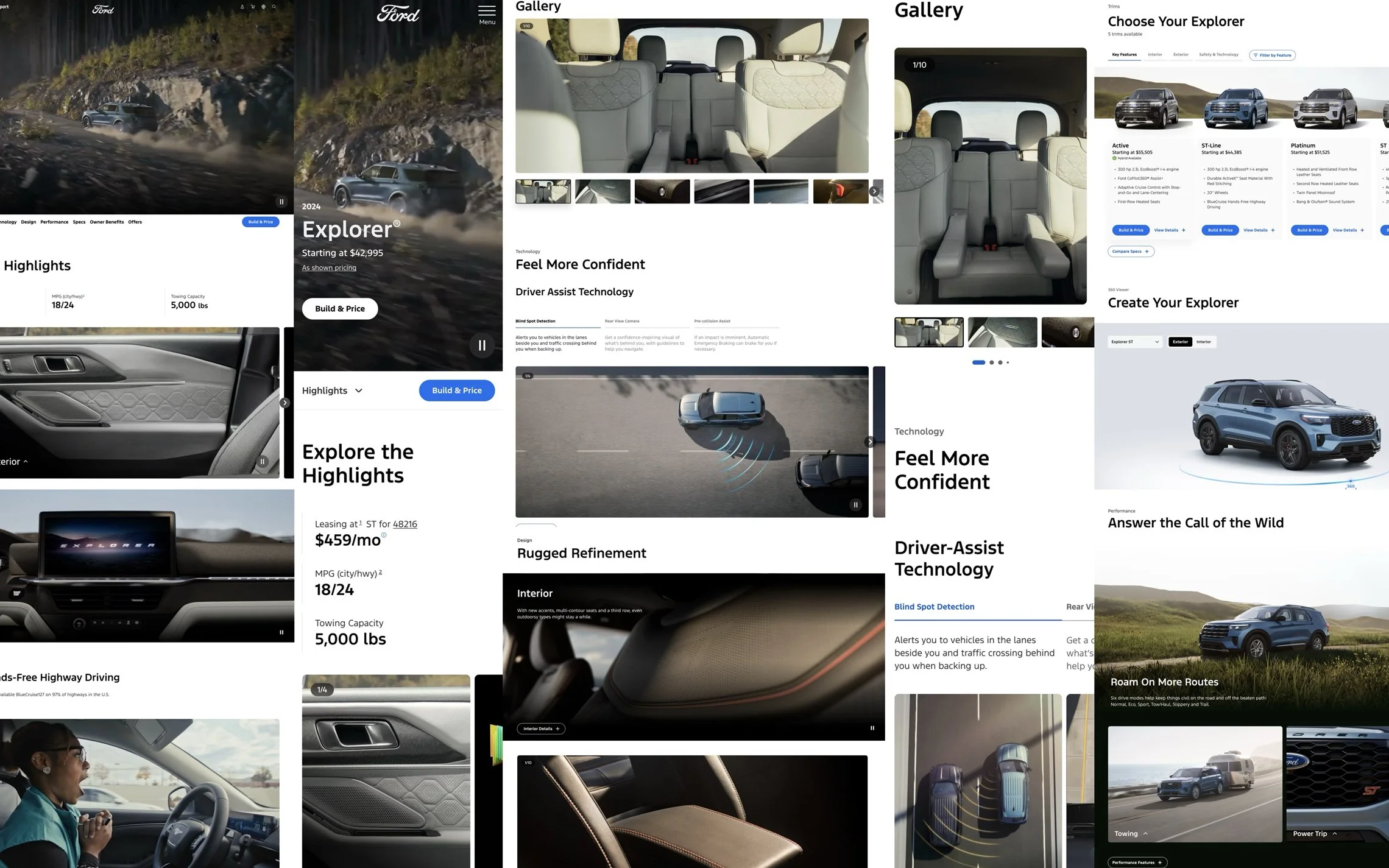
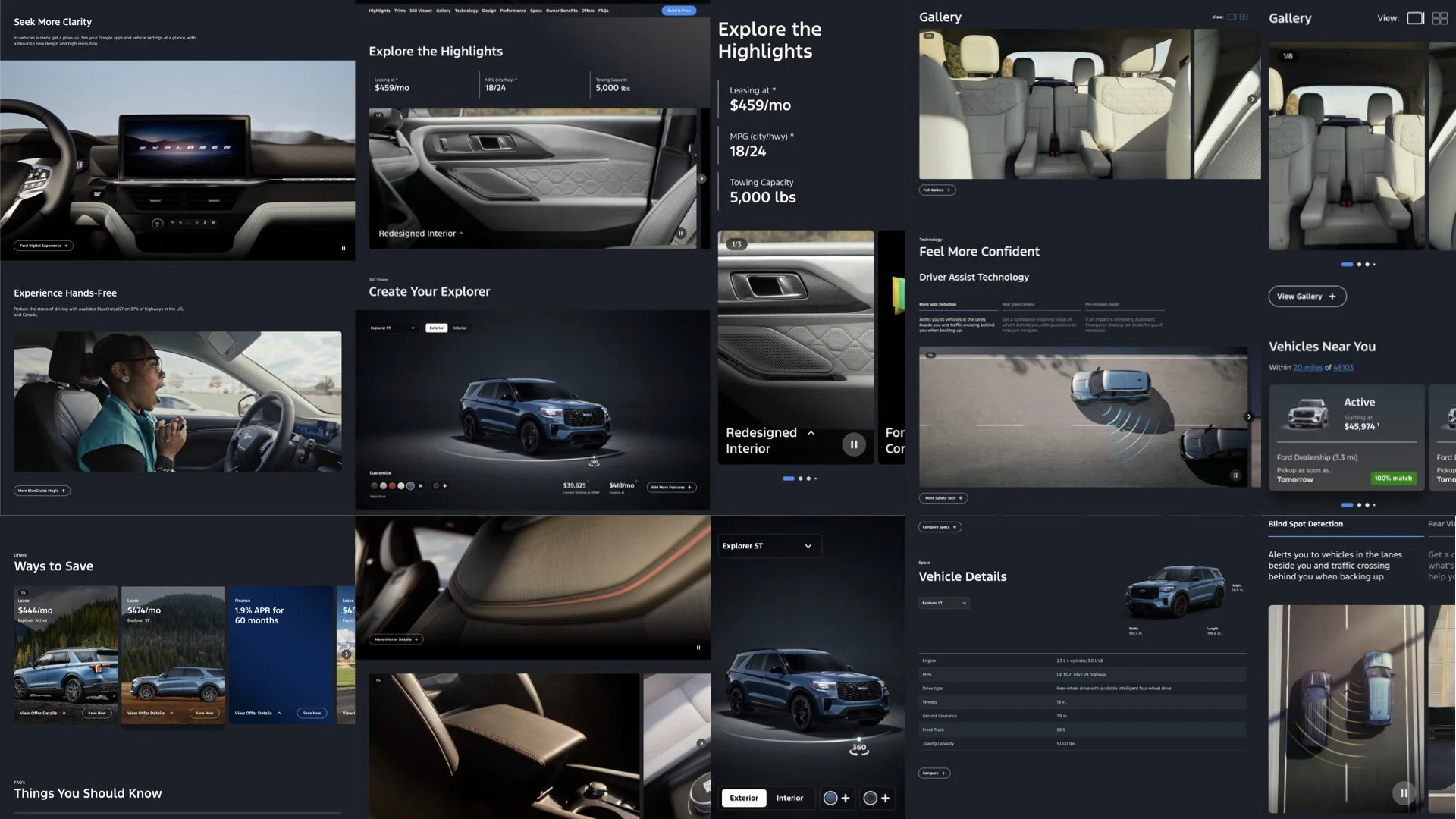
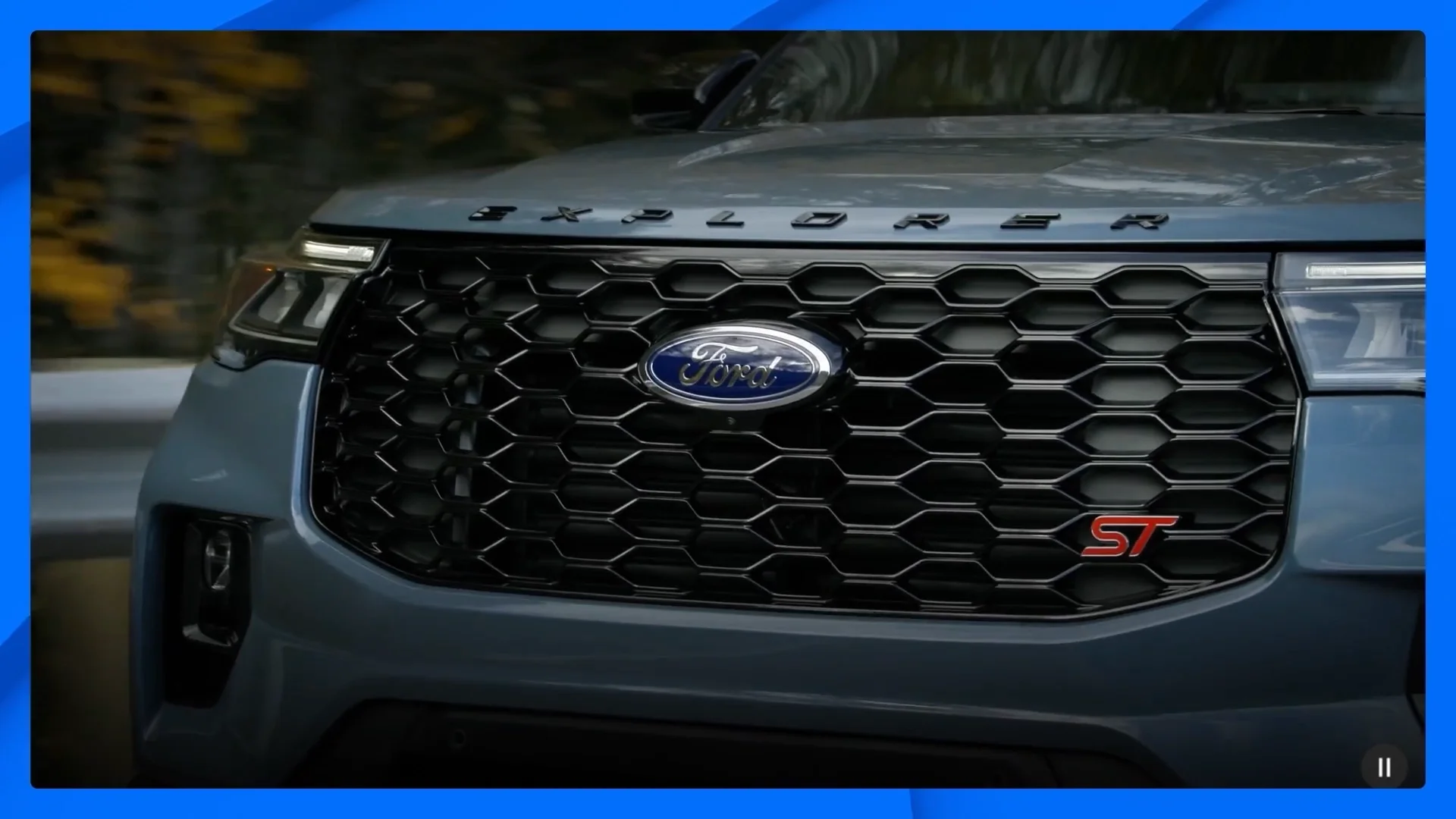
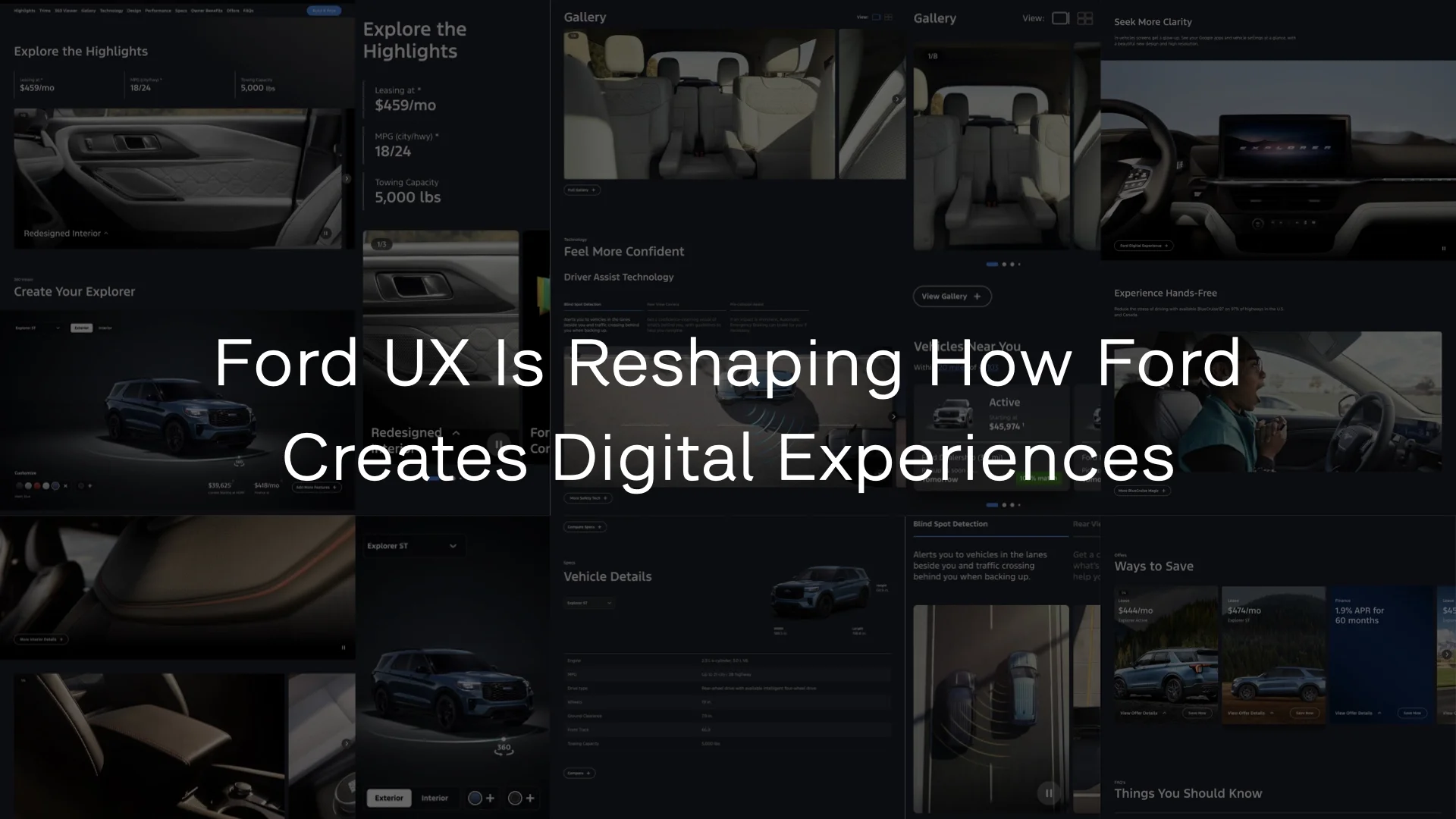
Directed the creative architecture for Ford’s next-gen platform. Using the Explorer as the flagship proving ground, visual hierarchy guided users straight from hero storytelling to action: Build, Price, Reserve. Navigation, spec comparison, and checkout were compressed into minimal clicks, rewriting content to feel like trusted guidance rather than sales pressure.
2
Motion-to-Code Pipeline
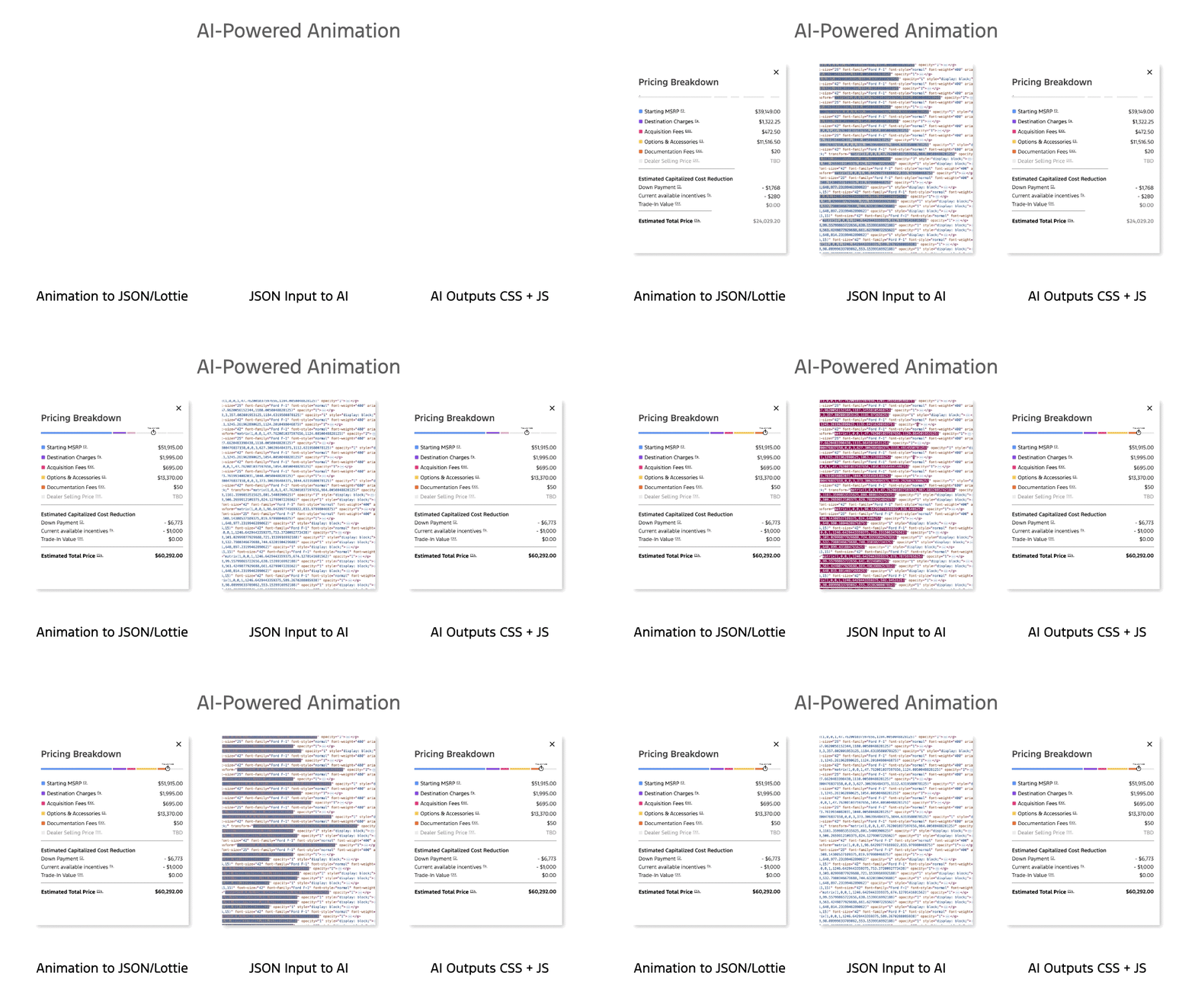
Pioneered an AI-powered pipeline that converts motion design directly into production-ready code, collapsing the gap between creative direction and engineering implementation, and establishing a new standard for how Ford's design and development teams work together.
3
Global Governance Framework
Authored the documentation, component libraries, and governance models that allow international teams to execute with complete consistency across geographies without diluting brand integrity.
4
The system wasn't a style guide. It was a living creative infrastructure. Built to be stewarded, evolved, and enforced at global scale.
— Impact
Scale Without Compromise
The launch proved that complex enterprise infrastructure and premium consumer design are directly interdependent.
Design System
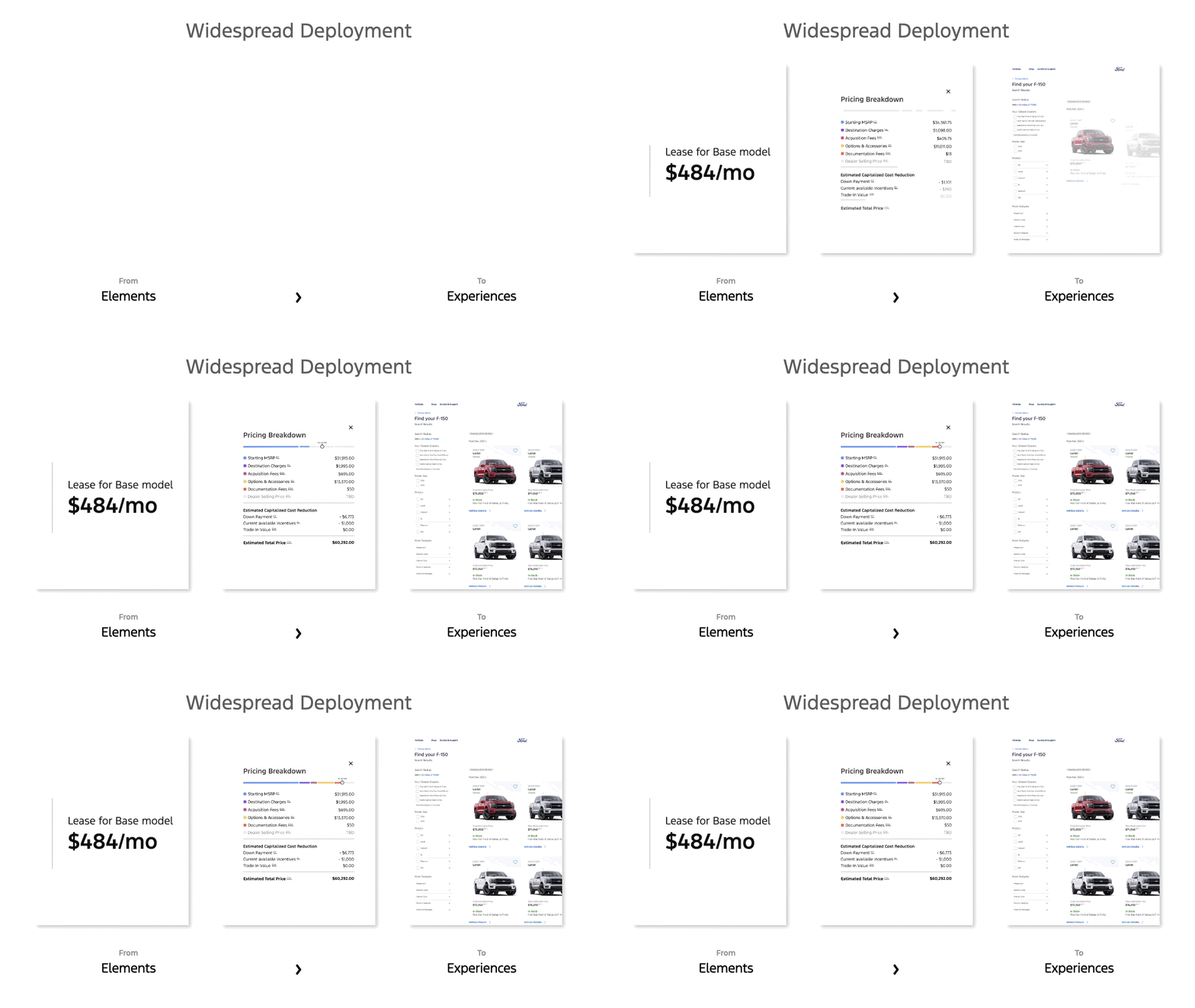
Deployed the foundational design system as the single source of truth, systematically eliminating fragmentation across global product lines.
Unified Brand Experience
Connected thousands of digital touchpoints under one architectural foundation, ensuring seamless consistency as the system expands across international regions.
Accelerated Time to Market
Empowered engineering teams with production-ready motion-to-code pipelines, drastically reducing friction between design handoff and live deployment.
The Currency of Confidence
The long-term value extends beyond conversion lift into customer trust:
J.D. Power #1 Ranking: In 2025, J.D. Power ranked Ford.com the #1 Automotive Mass-Market Website, citing clarity of navigation, rich content, and shopper satisfaction.
Durable Lifecycle Ecosystem: Established scalable infrastructure that now unifies connected-service upsells, ownership dashboards, and vehicle checkout into a continuous lifecycle loop: Research, Buy, Own, Upgrade, Repeat.
— My Role
I led this work across two distinct phases and institutions. At VML, I served as Experience Design Director and Group Creative Director during the foundation phase—contributing hands-on design, advanced prototyping, motion design, and digital strategy while establishing the core design system and experience architecture.
I then transitioned directly inside Ford as Senior UX Manager and Group Creative Director to lead enterprise scaling and direct the launch of the next-generation Ford.com. In this in-house role, I conceived and prototyped the initial proof-of-concept for the AI-powered motion-to-code pipeline, built out formal component library documentation, and developed a pilot playbook featuring an AI assistant for digital experience teams.
This transformation was made possible through close partnership with a talented cross-functional team of experience designers, UX researchers, copywriters, data analysts, and software engineers across both VML and Ford.